
Ava Hicks
A recent post on X about the IUD received mixed responses, and has prompted a discussion about who the IUD is really for.
The post, from January 24, is a picture of a man quite literally jumping for joy with the caption, ‘roommates girl got an IUD, safe to say he’s pretty excited.’
As expected on X, people have flooded the replies defending both sides of the argument.
One states: ‘Why? That procedure is painful. Her menstrual cramps will now be epic. Her risk of infection or an ectopic pregnancy just went up. Not much to cheer about, especially by the person assuming none of the pain or [risks].’
Alternatively, another X user argued: ‘Why are people upset about this. Is everyone ok? It’s a win-win for this couple lmfaooo’.
The debate clearly has many layers, but why is this post so controversial? Do men know the processes and risks of the IUD? Is the pain his girlfriend went through worthwhile? Who is the IUD for?
But first, a sex-ed lesson
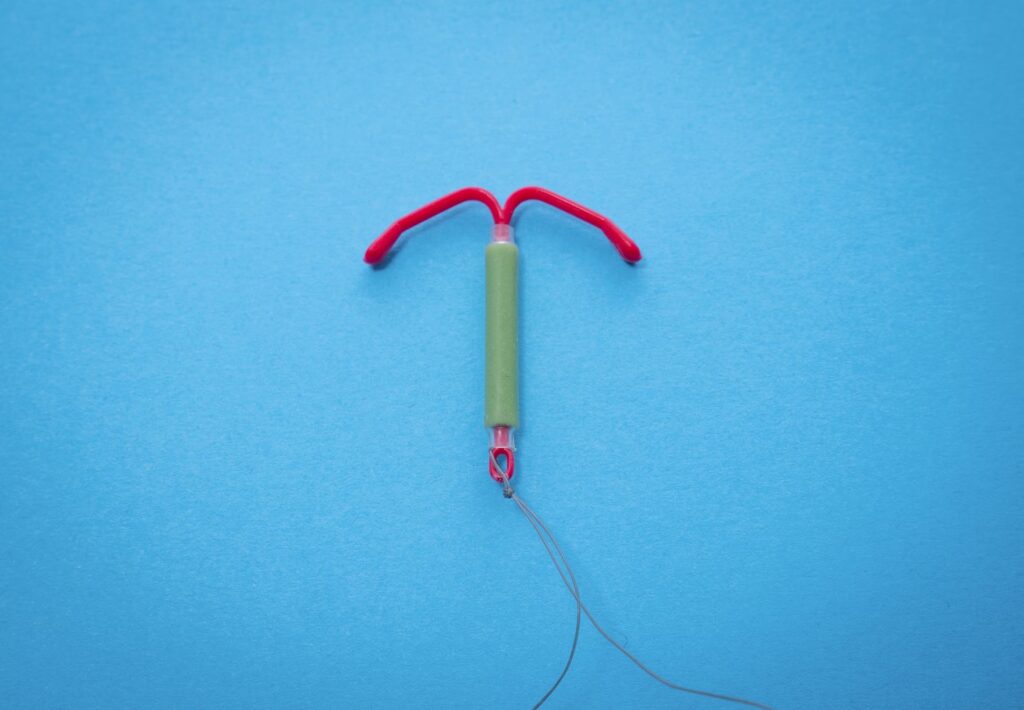
The IUD (intrauterine device) is a T-shaped contraceptive that is inserted into the uterus. Also called the copper coil, this is a non-hormonal contraception. Instead, it releases copper into the womb, which:
- Makes it difficult for sperm to reach the egg
- Thins the womb’s lining, decreasing the chance for an egg to attach to it
Similarly, the Mirena coil is the same shape but emits hormones into the uterus – this, though, is called an IUS (intrauterine system).
The insertion procedure is not long, but it can be painful. It is not administered under any anaesthetic, but it is recommended that patients take an ibuprofen before their appointments.
Why do people choose the IUD?
“The perfect choice for people who find that other forms of contraception mess with their quality of life”
The IUD is more than 99 per cent effective in preventing pregnancies. This is similar to the contraceptive pill, however, it removes the responsibility of having to take the pill correctly.
Missing a day of taking the pill can make it only 93 per cent effective. Once inserted, the IUD works immediately for 5-10 years (dependent on the type of device and its size).
Plus, as mentioned earlier, it’s a non-hormonal alternative, which is the perfect choice for people who find that other forms of contraception mess with their quality of life.
The post on X implies that there are other reasons that people might choose the IUD as their preferred contraception.
Comments on the post suggest that not having to use condoms is a deciding factor here, too. It has to be said that IUDs do not protect against STDs and other sexually transmitted infections.
However, the discourse in the comment section seems to be that this is mostly for the male benefit and is just their preference.
One reply sarcastically pokes fun at the man in the post and argues that he’s ‘lazy’ for not wanting to wear a condom: “’Yay my girlfriend went through an invasive painful medical procedure because I’m too lazy to wear a condom’”
So, who is the IUD really for?
This post on X has suggested that the IUD is for the men in these relationships, and that women are undergoing a ‘painful’ procedure just to add to their, in this case, boyfriend’s satisfaction.
What is particularly worrying here is that the caption of the original post did not say this at all, but the replies are flooded with people understanding the intention anyway. The sexual climate of our world still focuses on male pleasure and ease.
“Overall, though, it’s a conversation that people having sex have to have with each other”
There are other reasons to consider, though. Another responder explained: ‘I actually started birth control so I didn’t need to use condoms because I had bad skin reactions to every kind I tried but sure, it’s only cis men that prefer no condoms.’
Many women aren’t against using a condom. It can even feel better with the ones that are ‘ribbed for pleasure’, it can add extra lubrication, which is sometimes desperately needed, and it protects everyone involved from STDs.
However, contraception can be a solution to allergies, acne and hormone imbalances. Above all, contraception gives us some peace of mind that we are less likely to get pregnant.
In fact, the only reason I can see not to use a condom when you have an IUD is the cost. If you’re in a relationship and not worried about contracting STDs, and you practice safe sexual health, the condom can become a financial burden.
Overall, though, it’s a conversation that people having sex have to have with each other. Everyone has different boundaries, so communication is key. If a woman gets an IUD because she or her partner doesn’t want to use a condom or has an allergy, as long as they talk about it beforehand, the IUD is for both of them.
“The burden of contraception unfortunately often falls on people with vaginas”
This is serious…
What needs to happen, though, is for the IUD to be taken much more seriously. The pain of the insertion process is no joke, and it goes on for about a week after the procedure. Some people face complications or side effects. Everyone should recognise that, while we choose to get the IUD for a number of reasons, it is not an easy thing to do.
The burden of contraception unfortunately often falls on people with vaginas. And, until there are just as many options for male contraception, everyone has to have empathy. The IUD is for women and for men, but it is women who are subject to jokes and poor treatment in the name of male pleasure.
Hopefully, this discourse opens eyes to the severity of contraception. Getting an IUD is a choice people happily make. But this doesn’t mean it should be taken lightly or reduced to a method of achieving better sex.
Read Next:
-
LET ME SEXPLAIN: CONTRACEPTION
-
SHOULD THERE BE A MALE CONTRACEPTIVE?
-
INTERVIEW WITH GAVIN BROWN FROM TRADE SEXUAL HEALTH
Featured image courtesy of rhsupplies on Unsplash. No changes were made to this image. Image licence found here.
Ava Hicks


I am currently an MA News Journalism student at Cardiff University. My passion for journalism came from contributing to my university publications and now I wish to pursue is as my career. My interests lie in entertainment, lifestyle, and current affairs.