
Jessica McKeown
In a film market filled with bang-average forgettable romantic-comedies, divorce-comedy drama The Roses stands out as love goes wrong and descends into all out war.
Loosely based on Warren Adler’s novel The War of the Roses (1981) and the 1989 film starring Michael Douglas, Kathleen Turner and Danny DeVito, this modern take follows British couple Ivy (Olivia Colman) and Theo (Benedict Cumberbatch) as they slowly head towards a bitter divorce.
Plot
The film opens with Theo and Ivy Rose in marriage counselling as they are asked to read out ten things that they love about the other. Theo begins the session with four back-handed compliments, saying that “The shape of her head is somewhat pleasing, at a distance”. The therapy session then descends into a series of insults when Ivy reads out her list, setting the tone for the rest of the film.
Flashback
Flashing back to a decade before, audiences are shown the whirlwind meet-cute between the couple in a restaurant in London resulting in impulsive sex in the walk-in freezer, as well as Theo joining Ivy in her move to California. Ten years later, the couple have twins Hattie and Roy for whom Ivy has sacrificed her business dreams to raise. Theo has newly designed a naval museum and surprises Ivy with a restaurant of her own to manage.
One fateful stormy night kicks off Ivy’s career but sinks Theo’s, as his naval museum collapses under the weather. Flipping the power dynamic of who the breadwinner is, resentment begins to simmer in both. Theo grows frustrated with being relegated to stay-at-home dad and Ivy begins to feel disconnected from her children under Theo’s influence.
“Gender roles and their impact on power dynamics in relationships is at the heart of this film. Ivy sacrificed her career and her dreams to raise children whilst Theo had the successful career.”
Despite attempts to save their crumbling marriage, the relationship grows more and more strained until Theo has an epiphany: he no longer loves Ivy and wants a divorce. As the two fight over who gets the house, the dispute between them escalates costing them their friends, their jobs and their reputations.
Similarities To The 1989 Film
The film’s plot only has a few similar scenes to the 1989 film: a dinner party that goes wrong and the final sequence where the couple try to kill each other. Beyond that, The Roses spends significantly more time showing how the marriage broke down over time resulting in a more tense build up.
The screenplay was written by Tony McNamara who said: “ I thought, Why don’t we make a movie that’s more focused on what we do to each other while we’re married, and still sort of pay homage to the original.”
Themes
Gender roles and their impact on power dynamics in relationships is at the heart of this film. Ivy sacrificed her career and her dreams to raise children whilst Theo had the successful career. When this is flipped on its head so that Ivy is successful and Theo stays at home, the power dynamics shift, causing resentment to build in Theo towards Ivy’s success.
“By expanding on the little things that wear the marriage down, audiences don’t side with one half of the couple over the other — they are both equally terrible to each other.”
With ‘manosphere‘ influencers telling boys and men that being the breadwinner is a crucial element of masculinity, The Roses shows how Theo initially feels emasculated as a stay-at-home dad, but eventually embraces it to mould his children into athletes, erasing all of Ivy’s influence.
Another core theme, like the 1989 film, is materialism, as arguments erupt over who gets the house in the divorce. Funnily enough, the children aren’t mentioned at all during the divorce negotiations, which says everything about their personalities. The money that comes with success in this movie only succeeds in driving Ivy and Theo further apart.
Characters And Setting
Despite being filmed in Devon, England, the film is set in California with an American supporting cast. Why is that, and why does it work? The American backdrop provides a more realistic setting for some of the scenes, like at the climax of the film when a gun is used in a fight. However, keeping the two leads as British also adds to the humour of the film — as the American characters don’t understand British humour. In an argument at a dinner party where Ivy and Theo hurl memorable insults at each other but pass it off as banter. Their friends, Rory and Sarah even try it out resulting in a laugh-out-loud moment where Rory bluntly calls his wife a “whore”.
“The Roses is a worthy modern update to The War of the Roses and certainly leans more into the comedy than the 1989 film.”
Colman and Cumberbatch have brilliant chemistry, particularly when they are at each other’s throats. Having already proved themselves as strong dramatic actors, the duo’s comedic chops match well.
Looking at the supporting cast, Ncuti Gatwa stands out, despite a poor American accent, along with Kate McKinnon who shines in comedies.
Final Thoughts
The Roses is a worthy modern update to The War of the Roses and certainly leans more into the comedy than the 1989 film. By expanding on the little things that wear the marriage down, audiences don’t side with one half of the couple over the other — they are both equally terrible to each other.
The Roses was a hilarious examination of how success can affect relationships, and a brilliant film to watch on date night and say “Thank God that’s not us”.
READ NEXT:
-
TRUMP’S FILM TARIFFS – WHY THEY MATTER MORE THAN YOU THINK
-
MISSION: IMPOSSIBLE – THE FINAL RECKONING REVIEW
-
SING ALONG OR STAY SILENT?: THE DEBATE ON MOVIE THEATRE ETIQUETTE
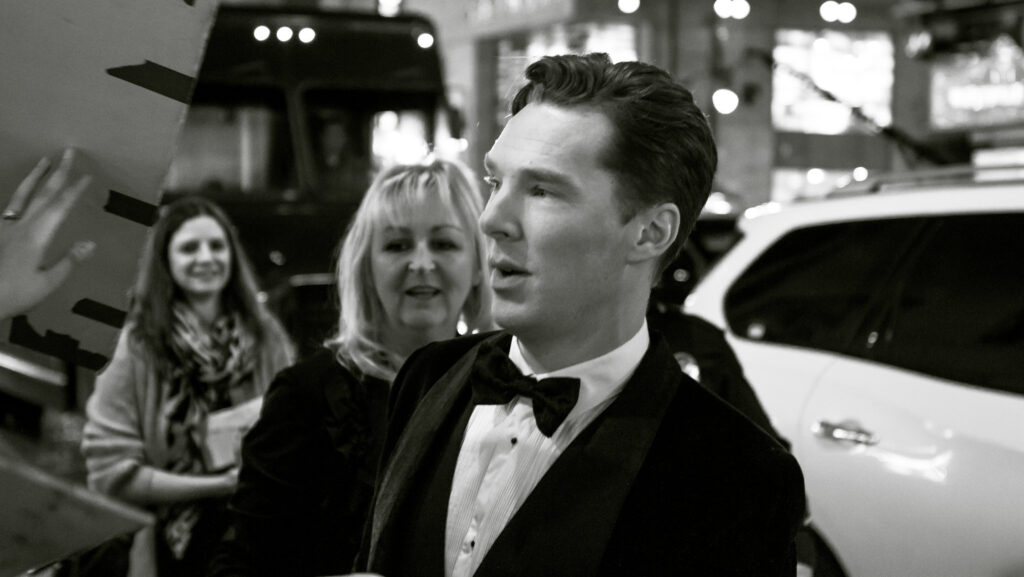
Featured image courtesy of DalWang92 on Flickr. No changes were made to this image. Image license found here.

