
*Name changed to protect anonymity
Sasha White
Periods are disrupting women’s career progression as the workplace fails to reflect the fluctuation of the menstrual cycle, a new survey has revealed.
May is Menstrual Health Awareness Month and workplace health support for women trails behind, with 1 in 10 women citing their menstrual cycle as a barrier to their career growth, according to the Workplace Health Gap survey conducted by Superdrug Online Doctor, a UK health and beauty company.
The research shows that younger women suffer the worst in terms of barriers to career progression. Among women aged 16-24, 20 per cent of women feel that periods have held them back from career development.
The Failure Of The 9-5 Work Day
The conventional eight hour work day was created in 1926 – almost a century ago – when 80 per cent of the workforce was male. Male hormone cycles reset every 24 hours, aligning naturally with the nation’s typical working hours, while women’s hormones operate on a 28-day cycle.
This means many women find it increasingly difficult to consistently perform at the same level as their male peers throughout the month, leading to an overall stagnation in salary and career progression.
“Unfortunately, perceptions of what is ‘professional’ and ‘acceptable’ often intertwine with women’s health and the choices they make about it.”
Empoword interviewed Mental Health specialist and GP Medico-Legal Expert Witness Dr Hana Patel about how the structure of the working day and lack of menstrual support continues to fail working women.
“Women’s cognitive and emotional performance naturally fluctuates across the menstrual cycle,” explained Dr Patel.
“Rising oestrogen levels during the follicular phase and ovulation boost focus, mood and memory, making those high-energy, demanding tasks easier.
“In contrast, during the late luteal and early menstrual phases, progesterone dominance and hormonal withdrawal can lead to reduced concentration, lower mood and greater fatigue, making rigid 9–5 schedules particularly difficult to manage.”
Working With Extreme Period Pain
In a study conducted in 2023, 49.7 per cent of women felt they couldn’t speak to their bosses about menstrual pain. Meanwhile, 37 per cent of women say they work through extreme period pain without disclosing it at all.
This fear of judgement is indicative of a wider workplace culture where stigma persists. Unfortunately, perceptions of what is ‘professional’ and ‘acceptable’ often intertwine with women’s health and the choices they make about it.
Dr Patel believes many work through extreme period pain because it’s what they’ve grown used to.
She said: “Period pain has been downplayed for so long that some women feel it’s just part of the deal – something to push through quietly. There’s also a concern that raising it might be seen as complaining or not coping, especially in fast-paced or male-dominated work environments. The result is often silence, even when the symptoms become disruptive.”
A lack of support for menstrual health is causing 36 per cent of women aged 16-24 of women to reconsider their job role.
Workplace Menstrual Health Support By Sector
HR stands out as the least supported sector, with 47 per cent of women reporting their workplace fails to provide sufficient support for female health issues – 1.3 times higher than the UK average. The Legal sector and Architecture, Engineering & Building follow at 41 per cent and 39 per cent respectively.
“Creating a supportive culture starts with simple steps,” acknowledged Dr Patel. “When leaders acknowledge menstrual health as a valid part of wellbeing – whether that’s through inclusive policies, training or just language used in meetings – it signals that the topic isn’t off-limits. Normalising these conversations can help remove the awkwardness, making it easier for employees to ask for what they need.”
A 2023 report by the Chartered Institute for Personnel and Development (CIPD) revealed that only 12 per cent of organisations provide menstrual health related help.
Employers need to prioritise closing this gap to ensure women feel supported and can ultimately do their best work.
Are Women Comfortable Speaking Up?
The sectors where women feel there is less menstrual health support are also where women feel least comfortable speaking up about their menstrual symptoms. When asked whether they feel comfortable calling in sick due to period-related symptoms, those that would feel most uncomfortable include IT & Telecoms (93 per cent), Architecture, Engineering and Building (90 per cent) and HR (89 per cent).
Similarly, sectors where there are the highest levels of pressure to remain productive, despite discomfort or pain are IT & Telecoms (47 per cent), Sales, Media and Marketing (44 per cent) and Architecture, Engineering and Building (42 per cent).
“This fear of judgement is indicative of a wider workplace culture where stigma persists.”
Journalist Annie*, 24, experiences frequent severe period pain and often has to work from home to manage her symptoms.
She said: “I dread every month when I know my period’s coming. I want to stay productive but I feel like I’m fighting against my body. It’s stressful having to plan my life around my period. I find it harder to do my job to the best of my ability and I worry more about making mistakes.
“I feel very supported by my current employer but there’s only so much they can do without proper policies in place. It’s hard when it takes so long to get a diagnosis for any gynaecological conditions. There’s definitely a gap where it’s considered ‘just’ period pain compared to other disabilities.”
A Demand For Dedicated Menstrual Leave Policy
There is still work to do in terms of implementation of lasting policy regarding menstrual leave allowances. A 2022 YouGov poll found that nearly half of Britons are in favour of menstrual leave in the UK.
In 2022, Spain proposed legislation making it the first country in Europe to give workers paid menstrual leave, providing optional sick leave for three days per month for workers suffering from severe period pain. This prompted UK campaigners and charities to call for designated menstrual leave.
“Menstrual leave could be a game-changer by putting pressure on outdated workplace culture and structures to evolve to meet the needs of modern working women.”
The Legal sector is leading in demand for formal support structures, with 24 per cent of women calling for a dedicated menstrual leave policy. Additionally, 16 per cent of women are calling for menstrual leave, a number that jumps to 28 per cent among those aged 16-24, and 21 per cent among those aged 25-34.
With young women experiencing the most negative impact on their career growth due to period-related symptoms, it is unsurprising that they are leading the charge for systemic changes to treatment of the menstrual cycle in the workplace.
Menstrual leave could be a game-changer by putting pressure on outdated workplace culture and structures to evolve to meet the needs of modern working women.
“‘The challenge is making sure it’s implemented fairly and without stigma…”‘
Dr Patel said: “Menstrual leave could offer real relief to those who struggle with painful or disruptive periods, particularly with conditions like endometriosis. It shows that an employer is listening and taking health seriously.
“The challenge is making sure it’s implemented fairly and without stigma – no one should feel singled out or feel their career might be affected by using it. Sometimes, offering flexibility – like working from home or shifting hours – can meet people’s needs just as well.”
READ NEXT:
-
ONLINE ABSTINENCE: THE PROS AND CONS OF GIVING UP SOCIAL MEDIA
-
HOW TO COMBAT EXTREMIST MISOGYNY IN THE UK
-
WHO IS THE IUD REALLY FOR?
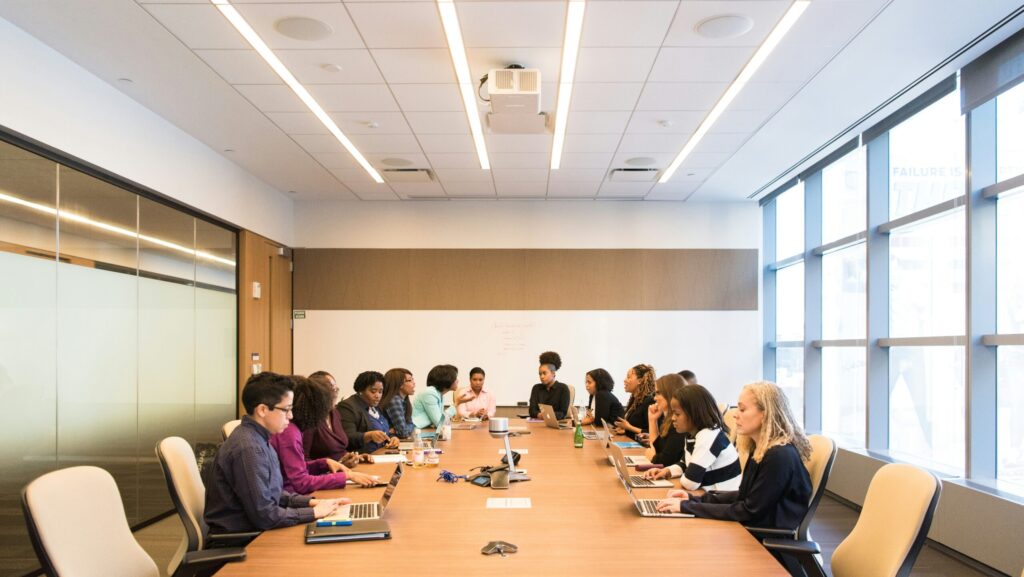
Featured image courtesy of Christina @ wocintechchat.com via Unsplash. No changes were made to this image. Image license found here.
Sasha White


NCTJ-qualified journalist with experience in producing compelling original stories, securing high-quality interviews, and creating content across platforms. First-Class Spanish and English Literature grad from Edinburgh University.