
Grace Rodulfo
The average person spends approximately 5.5 years on social media.
As digital natives, social media is second nature to Gen Z and millennials. I remember first downloading Instagram in year 7, beaming with the excitement of uploading pictures of my Maybelline ‘Baby Lips’ collection and liking posts of Kylie Jenner’s blue dip-dyed hair (what an era!). A tool that was once innocent and convenient, a way to connect with friends and family, turned into an addiction that many cannot shake.
“A monster of information overload, toxicity and constant advertisements”
We seek stimulation from our phones whenever we are bored. We watch more cooking videos on reels than cooking and might know more about the day in the life of Love Island influencers than what is going on with our loved ones. It is how we keep up with trends and the news, a career for many and a form of entertainment and learning.
However, there has recently been a resurgence of ‘digital detoxing’ and shifting views of whether social media is a place people want to dedicate their time to. It has left young people wondering: is being offline cooler? Is the potential ‘FOMO’ worth it for better mental health?
Digital Detoxing
The singer Lorde quit social media to better her mental health, going as far as deleting the Google search engine, reports Tòmas Mier. Despite her online abstinence, she remains ‘relevant’ and adored. This left me wondering if deleting social media is necessary for creativity and authenticity.
There are 5.2 billion active social media users worldwide, according to a report by Backlinko. Digital fatigue is resulting in this new desire to be offline.
Digital detoxing events are increasingly popular, such as The Offline Club London, gathering over 2,000 people aged 20-35 with the shared desire to switch off for the evening. Agence France-Presse reports that the event requires you to drop off your phone in a deposit box, “Happy in the knowledge that for the next two hours you’re completely offline.”
Mental Health and Social Media
Excessive social media exposure produces stress hormones like cortisol. Comparing yourself to others, seeing negative content and frequent notifications can trigger the body into “fight or flight” mode. This state of heightened stress may lead to mental and physical health problems such as anxiety, depression and sleep difficulties, according to Constellation Behavioural Health.
I used to employ social media as a tool for distraction, scrolling for hours through short-form and fast-paced content. When I got bored with TikTok or reels, I would task-switch to Instagram, subconsciously seeking dopamine that just left me miserable and overstimulated. I would feel irritated at myself for not being able to focus on important tasks and would feel groggy the next day after scrolling right before going to sleep.
“I no longer feel that incessant need for stimulation quite so much”
During the lockdown in 2020, TikTok became a vehicle of happy distraction, consisting of learning dance routines to catchy songs. However, somewhere down the line, this app became a monster of information overload, toxicity and constant advertisements.
Every day my feed would tell me what exercises I needed to do, what scent I should be wearing and the correct way to wrap my winter scarf. It left me feeling insecure about the clothes I wore and the skincare products I used. Deleting the app in 2023 was one of the best decisions I ever made for my mental health.
Giving Up Social Media
Limiting social media use to 30 minutes per day results in a significant improvement in well-being, reveals Reid Health.
I removed the Instagram app from my phone, and I now just access my profile from my laptop. Instead of using it as a tool for comparison like I used to, it’s a way to keep in touch with people by message and find out about music events, book recommendations and creative job posts.
“Online abstinence has helped me to feel more connected than I ever have in my life”
I also deleted the Snapchat app because I felt I had outgrown it in my early 20s and that there are more authentic ways to keep in touch with my friends. The ‘Snap maps’ feature started to feel strange, and I realised I did not want to know where my friends were at any moment. What once was a convenient app to stay in touch with people, yet again, morphed into something over-stimulating and evasive.
Deleting these apps has meant I physically pick up my phone less, and I don’t feel as pressured to respond to people in a certain time frame. Instead, I reach out to pick up the current book I am reading, my headphones to listen to my favourite artists or to do something creative. I value my in-person connections, dedicate myself to being present, and I no longer feel that incessant need for stimulation quite so much.
‘FOMO’ versus authenticity
Removing these apps also meant that the ‘FOMO’ was real. At the time of giving up social media, I worked in a space where all my coworkers were Gen Z, so the number of references and new songs that I did not know made me feel a bit isolated at times. It made me feel like a Mum who did not understand her children’s dialect and memes!
Initially, I thought I was missing out on something, but that something was primarily the entertainment aspect of social media. I decided that was not enough to make me want to re-download.
“Social media gives the illusion of being connected and updated. In reality, it does the opposite”
At times, I felt disconnected, as if I was missing out on group chat messages or posts and knowing less about what people were up to. However, I soon realised this gave me more space to reach out and initiate in-person meet-ups, rather than finding out what people were doing by viewing their Instagram story.
I realised that social media gives the illusion of being connected and updated. In reality, it does the opposite.
Living Freely
Living authentically without much social media presence lessened my need to feel validated by posting. When I go to a gig or see a lovely sunset, I might take a picture or video to capture the moment for myself and no one else.
Instead of getting inspiration online, I find myself inspired by all the creative outfits I see people wearing as I walk past them on the street or take a note of the book the person is reading on the tube.
Overall, online abstinence has helped me to feel more connected than I ever have in my life. It has encouraged me to consume less, to be more creative and to get back to my love of reading. The social exclusion I might feel is undermined by a happier and more liberated version of myself.
READ NEXT:
-
CAN SOCIAL MEDIA CAUSE MASS HYSTERIA?
-
ARE SOCIAL MEDIA UPDATES MAKING THEM OBSOLETE?
-
STICK TO YOUR SOCIAL MEDIA PLATFORMS, INFLUENCERS, LEAVE THE BOOKSHELVES FOR THE WRITERS
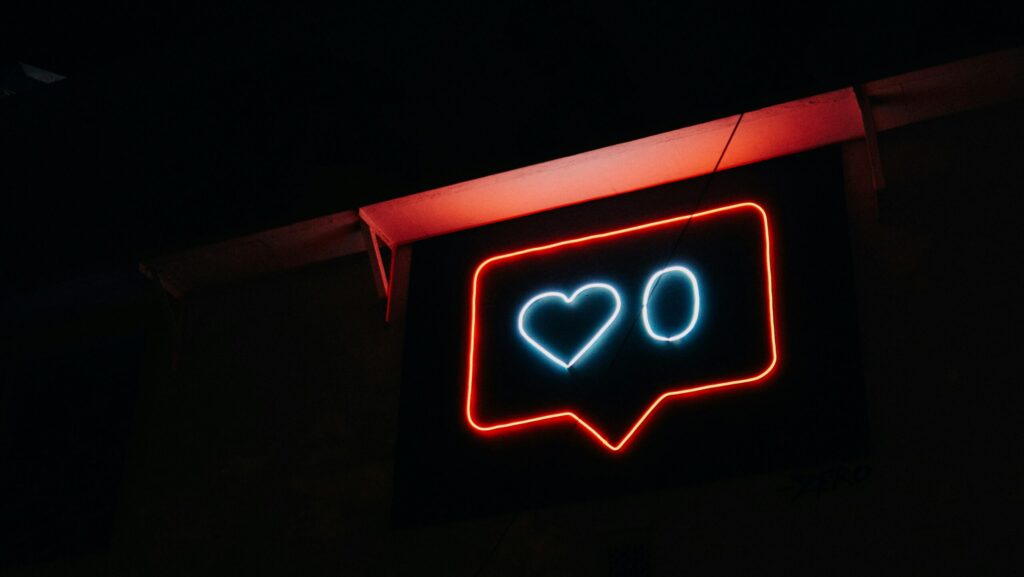
Featured image courtesy of Prateek Katyal via Unsplash. No changes were made to this image. Image license available here.

