
TW: mentions of suicide and bullying
Jules Millward
Like most mums, my social media feed is filled with reels and memes about parenting. One evening, while aimlessly scrolling, I accidentally clicked on a get ready with me video.
I should’ve stopped watching, but couldn’t. The beauty influencer showing off her morning routine instantly drew me in. The algorithm then sent my feed into a spiral of these GRWM reels, and I couldn’t help but think: “Maybe if I have what she has, then I, too, will look like this.”
Now, imagine being a 10-year-old girl watching this with her friends. You’re at an age where you’re trying to fit in, are more body conscious and starting to compare yourself to your peers. You instantly need the expensive skincare that the influencer has, and if you don’t get hold of the latest Drunk Elephant glow drops the world might just end.
This is how we entered the Sephora kid era. Tweens running wild in beauty department stores, being rude to employees and spending their parent’s money on products not suitable, or even necessary, for their delicate skin.
Millennials and boomers are aghast, and scathing videos calling out these Sephora kids adorn TikTok. But what we struggle to see is that this behaviour is a by-product of their underdeveloped brains being exposed to a digital culture that creates instant gratification. Something the statistics are trying to warn us about, yet we’ve continued to ignore, with extremely detrimental consequences.
“There are no easy answers, because, while our heads are buried in our devices, we are losing Generation Alpha to theirs.”
The Consequences Are Clear
A recent OFCOM report found that 19 per cent of children aged three to five own a phone, and two in ten of their parents say they use social media independently. This rises to 69 per cent of children aged eight to nine. A shocking figure when I look at my 9-year-old, whom I have so far managed to shield from these platforms.
In 2024, almost 50 per cent of teenagers admitted to being addicted to these apps, the same apps that their parents are also addicted to. Our ability to remember a time when Facebook was just a twinkle in Mark Zuckerberg’s eye has disappeared.
“We must look up from our phones and do better.”
We only need to open our news app to see the damage that is being caused. The country was horrified when we learnt the killers of Brianna Ghey, a 16-year-old transgender girl, were just 15. It was reported that they had access to the dark web, begging the question, how do teenagers access a part of the internet that many adults aren’t even aware exists? If it’s that easy for them to find this content, then we have absolutely gone wrong somewhere.
The BBC reported that the social media presence of Scarlett Jenkinson, one of Ghey’s killers, showed a happy childhood. It makes it all the more surprising, then, that Jenkinson would also be watching torturous videos online.
“Whether it’s Sephora kids or the dark web, we have been reckless with what our children can access. “
Another teenager, Molly Russell, had fallen into a spiral of algorithms encouraging suicide. Her parents found her dead the morning after an evening spent watching Saturday night TV. They had no idea of the harmful material that had been pushed on her, and so, had no safety net to catch her when she fell.
An Impossible Balance
We can do all the right things, have the right controls and demand full access to their phones, but it still isn’t enough. Because of this, parents are facing an impossible balance: how do they protect their children from the dangers of smartphones without socially isolating them from their peers?
There are no easy answers, because, while our heads are buried in our devices, we are losing Generation Alpha to theirs.
The Smartphone Free Childhood pledge has grown in recent months. I get the united we stand, divided we fall ethos but unless all parents opt, then the effort seems futile. It only takes one child with a phone for others to be exposed.
Moving Forward
The reports that 90 per cent of schools in the UK now ban smartphones are promising. This is a big step, but there are still schools who rely on phones for learning materials, timetables and research because they don’t have enough resources to provide an alternative.
If they can have at least one place where they are free from notifications, comments, likes and doom scrolling, then it is a start. However, what we really need is accountability, not just from parents and schools, but from the Government and tech companies.
Whilst new measures from the Online Safety Act are supposed to put the responsibility on social media companies to protect children, they come too late for the Brianna Gheys and Molly Russells of the world. The damage is already done.
“We need to push for systematic change – from legislation and education, to parenting and regulation.”
Skincare videos, while not illegal, are still harmful. When a 10-year-old watches one, more follow, creating unrealistic beauty standards, reinforcing the feeling of not being good enough. A feeling the algorithms will exploit.
Whether it’s Sephora kids or the dark web, we have been reckless with what our children can access. We need to push for systematic change – from legislation and education, to parenting and regulation. We must look up from our phones and do better.
READ NEXT:
-
UK GOVERNMENT MOVES TO CRIMINALISE CHILD EXPLOITATION AND CUCKOOING
-
SOLVING SOCIAL ISOLATION: IS IT AS SIMPLE AS GOING OUTSIDE?
-
DON’T LET THE CONVERSATION END WITH BIG BOYS
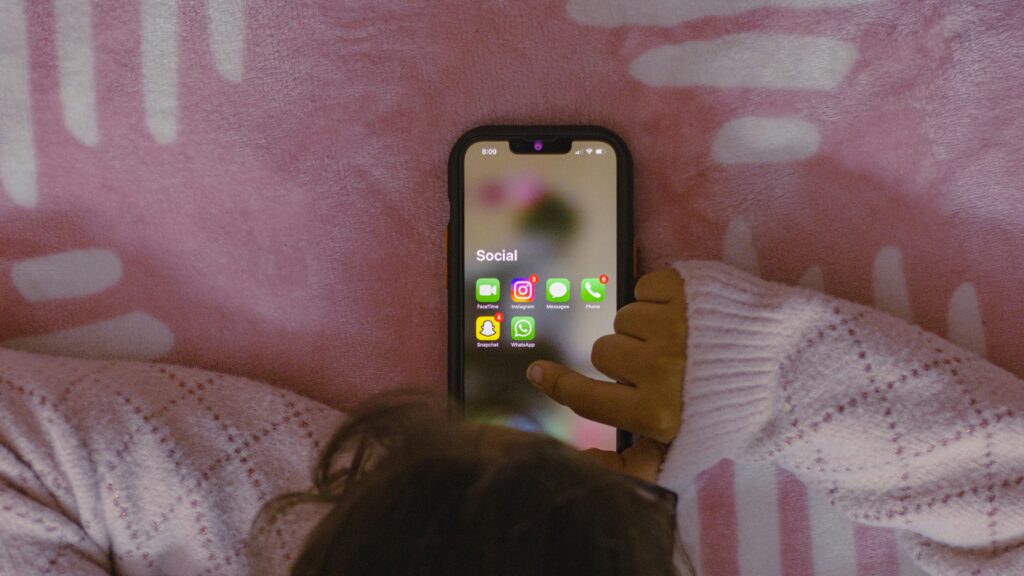
Featured image courtesy of Sanket Mishra on Unsplash. No changes have been made to this image. Image license found here.
Jules Millward


Jules is a freelance writer and mum of five. She recently completed and MA in Journalism. She is passionate about making a change with her writing.