
Emily Bird
Japan’s cultural wave has washed over us once more, this time in the form of The British Museum’s latest exhibition, Hiroshige: artist of the open road. I was fortunate enough to see the new exhibition featuring some of Utagawa Hiroshige’s most renowned pieces on two occasions since its opening on 1st May 2025 and it certainly doesn’t disappoint.
The Travelling Artist
Hiroshige came from a troubled childhood. After becoming an orphan at the age of 12, he used art as a space to explore the world around him under the tutelage of Toyohiro of the Utagawa school, which we see more strongly in his later pieces featured at the exhibition.
The exhibition takes you on a cultural and immersive journey through his career, playing with your senses at each step of the way.
On entering, you are greeted by a digital display of his work accompanied by one of the best-known surviving portraits of Hiroshige himself, painted by Utagawa Kunisada soon after Hiroshige’s death in 1858.
As the exhibition continues, you begin to uncover a glimpse into the country that inspired his work. One of his most impactful pieces for me, is The Rough Seas at Naruto (1855). The contrast between the ambient colours and the turbulent ocean encapsulates the duality of the natural world and perhaps depicts a view of Japan’s own duality under Samurai rule.
From here on out, we see the perfect mélange of – not only – Hiroshige’s own creations, but possibly more importantly, the work he inspired during- and after – his success.
Hiroshige’s own influences from nature are brought inside in the form of rain, bird, and insect soundscapes, bringing the pieces on display to life and – for those who have seen Japan for themselves – a sense of nostalgic tranquillity reminiscent of the very sounds that inspired his work.
This sensory blending creates an almost 4D experience of his works, bringing bathing scenes at Hakone and the whirlpool in Naruto to life.
In many ways, the exhibition’s focus is the widespread impact of Hiroshige’s work across the globe. His art is able to cross cultural and linguistic borders in very much the same way Japan’s cultural hold on the West continues today.
Translation of ideas
Just as authors and artists are influenced by politics today, so was Hiroshige. As cultural and social boundaries shifted, so too did his work.
Living under a military Samurai dictatorship that closed off Japan from the outside world, Hiroshige’s work is a product of its time. Although his pieces encourage us to view Japan from different perspectives, his work’s legacy and enduring popularity have much to say about the power of perception.
One of the exhibition’s most striking pieces shows Vincent van Gogh’s tracing of The Plum Garden at Kameido from around 1887.
Despite tracing Hiroshige’s original work by hand, Van Gogh’s creation is a far cry from the reference. His transformation of Hiroshige’s work speaks for itself. Despite being worlds apart, his work captivated Van Gogh in his later years.
The natural essence of Hiroshige’s Japan-inspired work is obscured by Van Gogh’s darker style when removed from its original context. But nonetheless demonstrates the cross-cultural conversations happening at the time.
Hiroshige, along with Katsushika Hokusai, played a key role in introducing Japanese art and aesthetics to Europe. His vivid use of colour and focus on capturing the passage of time greatly influenced Impressionist and Post-Impressionist artists. Additionally, his striking depictions of trees and flowers with bold lines significantly shaped the development of Art Nouveau design.
The importance of Hiroshige’s work today
It goes without saying that our current socio-political climate is at a crossroads. People are searching for an escape. With Japan’s tourist levels at a record high (again), it comes as no surprise that such exhibitions are piquing our interest.
Hiroshige was an artist working under stark censorship, yet his work still speaks to us today. While we, in the UK, are not facing quite the same pressures as Hiroshige was, we can learn something from his work. Creating social barriers may silence us, but art speaks for itself and holds a powerful message in its cross-cultural transmission.
If you are interested in seeing the exhibition for yourself, you can find the booking details here. The exhibition is open until 7th September 2025.
Read next:
-
THE BRUTALIST: A MEMORIAL OF POWER AND IDENTITY
-
‘MARIA’ REVIEW: A DIVA IN DECLINE
-
JAMES OR JANE BOND: CAN WOMEN PLAY THE ROLE OF JAMES BOND?
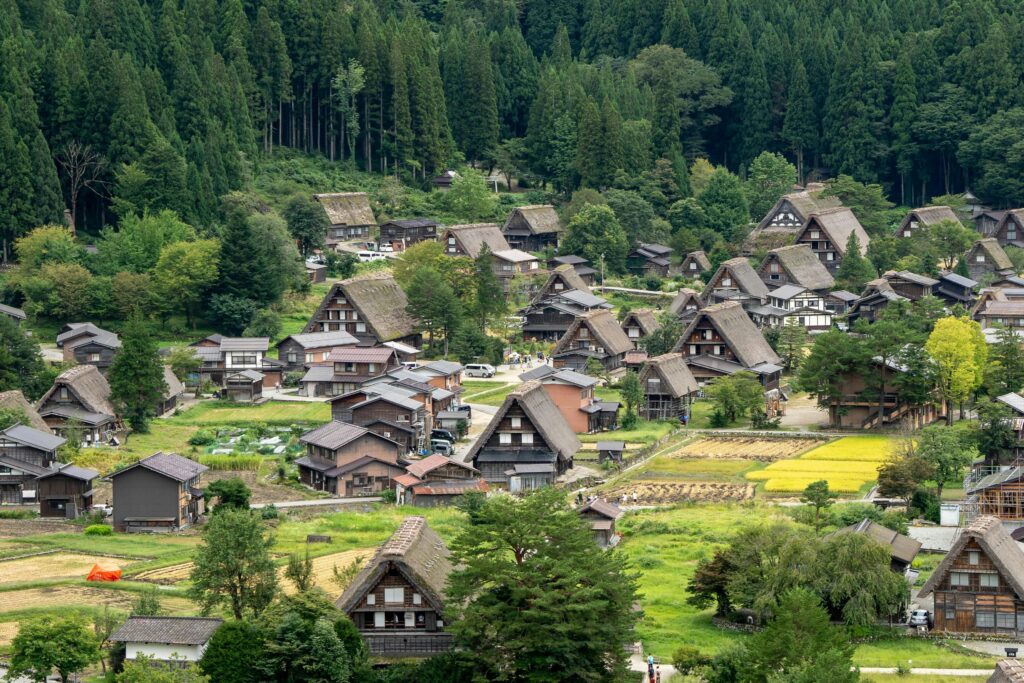
Featured image courtesy of Mateusz Walendzik via Pexels. No changes were made to this image. Image license available here.
embi98


I’m a modern languages graduate, currently completing an MA in Medieval Studies. I enjoy writing about politics, travel and languages and I hope you enjoy the reads!