
Sydney Johnson
Bong Joon Ho’s latest film, Mickey 17 (2025), attracted critical acclaim for its blend of sci-fi, romance and political commentary. However, critics aren’t discussing how the film successfully rejects the ‘disposable Black girlfriend’ trope.
People online have addressed this trope as harmful because it conveys the idea that Black female characters are introduced to storylines only as placeholders, until a white or non-Black woman shows up to take their place.
Mickey 17 might be one of the first films in a while that I’ve seen reject this trope. But why has it taken this long for society to start rejecting it?
i love how mickey 17 subverts this trope!! a lot of us thought mickey might get with kai, since we're used to the black gf being kicked to the curb once her flaws are revealed. but this doesn't happen. nasha is always mickey's number one and it's so refreshing. i love them sm https://t.co/7lM5FfMAp0
— myrah ✨ (@laprincessmyrah) July 10, 2025
What Is The ‘Disposable Black Girlfriend’ Trope?
We’ve all seen the ‘disposable girlfriend’ trope at some point in mainstream media. The main character, on a journey of self-discovery, will have an over-supportive girlfriend there to witness his endeavours. She’ll provide him with emotional support or save him from his thoughts. Then, before you know it, he’ll toss her aside for a supposedly ‘better’ woman.
Now, looking at the ‘disposable Black girlfriend trope’, the same rule applies. She exists as a temporary love interest for the main character until they toss her aside, maintaining their character arc of finding their “one true love”. And, usually, she’s white or non-Black.
“These outdated narratives are painful and need to be rejected.”
Why is it that when Black women are cast as a love interest, they’re always the “one that got away”? Has there ever been a moment in media where we are given the reality that a Black woman can be in a sustainable relationship?
Directors and screenwriters in Hollywood have a tendency to sideline Black female love interests, or give them a difficult romance arc. This directorial choice maintains a very negative stereotype that Black women are undesirable, even if they possess positive traits that one would consider attractive.
The ‘disposable Black girlfriend trope’ is evident in shows like Glee (2009), where Mercedes’ romances are fleeting compared to white characters. It is also seen in Supernatural (2005), where Dean’s Black love interest, Cassie, is a one-episode character, unlike his recurring white love interests.
The History Of The ‘Disposable Black Girlfriend’ Trope
Black women have always been written in a monolithic way. Between the early and mid-twentieth century, Black women were often cast in films and television as caricatures of racist and outdated stereotypes, including the ‘Jezebel’, ‘Sapphire’, or ‘Mammy’ tropes.
The ‘Jezebel’ trope, specifically, suggested that audiences should only see Black female bodies as seductive. Contrastingly, they could portray white counterparts in a more ‘modest’ way. Weird, right?! This trope heavily laced 20th-century films, including Birth of a Nation (1915) and Foxy Brown (Feitshans & Hill, 1974).
This was a direct result of the Transatlantic slave trade (16th-19th century), where white slave owners viewed Black female bodies as disposable and animalistic, which allowed them to condone the act of sexual abuse perpetrated against them.
Both the ‘Jezebel’ and ‘disposable Black girlfriend’ tropes are intrinsically linked, suggesting that Black female love interests in narratives serve the role of sexual objects. Then, the main characters ultimately push the same racist perspectives that have existed for far too long.
How Does Mickey 17 Reject The ‘Disposable Black Girlfriend’ Trope?
In Mickey 17, two versions of Mickey (Robert Pattinson) exist simultaneously after Mickey number 17 returns from a mission where they presumed him dead and, Mickey 18, his expendable replacement, greets him. They both hide to avoid termination while navigating the colony’s leadership and Mickey’s secret relationship with security agent Nasha Barridge (Naomi Ackie).
Nasha’s unwavering loyalty and bravery are central to her relationship with Mickey. Her resistance to cloning and value against human expendability are vital to Mickey’s development. She is consistently included and integral to every scene.
“Nasha breaks the stereotype of Black female leads, acting as a vital, unfiltered and strong character, essential to Mickey’s mission.”
Later in the film, when the colony faces threats from ‘Creepers’, the planet’s native creatures, Nasha emerges as a key mediator. Amidst conflict with the hostile creatures, Nasha’s intervention prevents a potential massacre by returning a captured infant, highlighting her leadership and dedication to peaceful relations.
Nasha breaks the stereotype of Black female leads, acting as a vital, unfiltered and strong character, essential to Mickey’s mission. Naomi Ackie was drawn to Nasha’s non-stereotypical nature and internal freedom. Ackie’s portrayal was validated by Nasha becoming a celebrated lead general at the film’s end, solidifying her impactful role.
Consequently, Naomi Ackie felt drawn to play Nasha because it wasn’t the stereotypical Black female lead. “I was so attracted to how surprising Nasha was. She’s someone who doesn’t filter herself. She’s someone who is really free on the inside, like she ain’t judging herself,” she said in an interview with Refinery 29.
“For us Black women, who have to sit here and swallow this narrative that our favourite shows and films have fed us, it hits hard.”
Reading about Ackie’s thoughts on her character made me feel confident in how well Nasha was portrayed in this film. The supportive storyline and arc surrounding her character is revolutionary for Black women like me to watch on the big screen. It almost felt like, after seeing Nasha be unapologetically herself, I, too, should feel that way.
What Lessons Can Hollywood Take From This Discussion?
There is still so much work to be done in Hollywood when it comes to addressing this issue. For us Black women, who have to sit here and swallow this narrative that our favourite shows and films have fed us, it hits hard.
In the end, Hollywood must address harmful stereotypes of Black women. These outdated narratives are painful and need to be rejected. Open dialogue with Black actresses about desired portrayals is crucial. Bong Joon Ho’s rejection of these tropes should spark a larger movement, long awaited by many Black women.
READ NEXT:
-
REVIEW: ‘MICKEY 17’
-
THE COMPLEX REALITY OF ONLINE MISOGYNY
-
BREAKING BARRIERS: EMPOWERING WOMEN IN HIGHER EDUCATION AND BEYOND
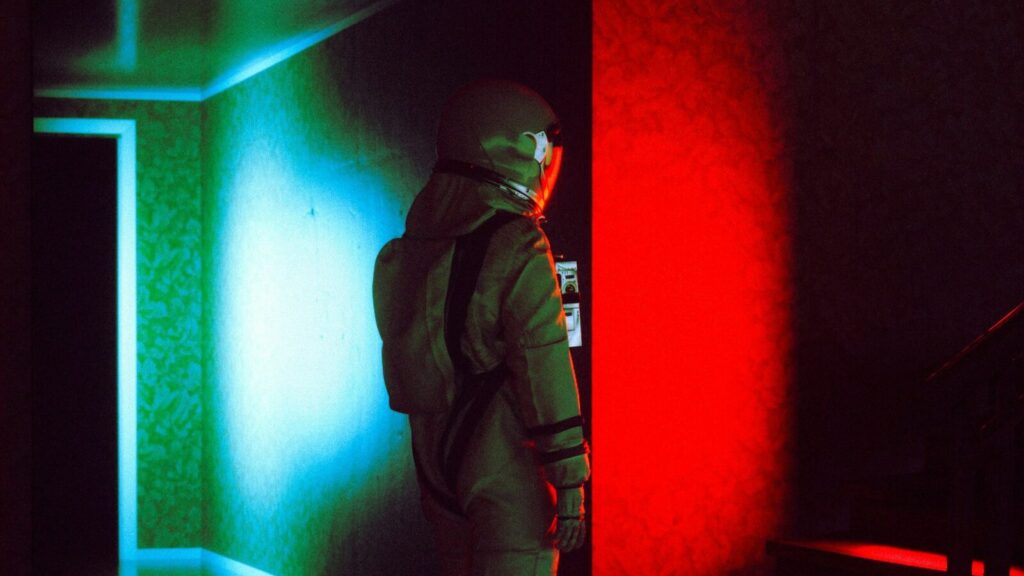
Featured image courtesy of Cash Macanaya on Unsplash. No changes have been made to this image. Image license found here.
Sydney Johnson


Hello! My name is Sydney and I am a junior content editor and freelance journalist. I'm a US-native and have a background communications, video production and marketing. I like to spend my free time reading, writing, traveling and trying new restaurants.